What Did We Play Yesterday?

A casual gameblog by REN★GADE. Inspired by miela583.

Domokun Backloggd RSS Feed

What Did I Play on 2016-02-18?

  • #patty and mr. miles Arrow: More posts

Patty and Mr. Miles is a Wolf RPG game by BrownSugar translated by cargodin. The main game is a cute, quirky RPG with Harvest Moon-type elements. The premise is all the men in the village have been cursed and now have animal faces. Patty and Mr. Miles travel to the wizard's tower to see what can be done and there are a number of side quests that involve helping the villagers. 

I came across this game while looking for games comparable to Lisa: the Painful, so going in I knew there was more than met the eye. There is a hint in the library, where Miles finds a disturbing history book, but otherwise the main game focuses on helping neighbors and being cute. While the game is really polished in many ways, aspects of the design nagged me. I enjoyed playing, but the minigames seem far too developed for the amount of plot and I had the distinct sense something was missing. Because it was.

There is an "after story" for players to experience post-game, and this is where things take a turn.

The developer explains that near the end of the development cycle they lost all of their common files, which I took to mean event scripts and dialogue. Since they still had all the assets in the game up to that point, they finished the game with what they had left and created a post-game epilogue explaining how the game was supposed to play out.

Folks, this is one wild ride. 

Bit by bit, the cute veneer is stripped away to reveal a dark reality: a witch is reviled and feared because she is a woman, she is banished and curses the villagers as revenge, Miles' goofy personality may be the result of brain damage after a magical memory wipe, Miles has PTSD and begins having flashbacks, and the village's history of bloodshed is revealed. It depicts some of the most disturbing drug-overdose scenarios I have ever seen, on par with the Joy Mutants in Lisa. The drug drives the villagers mad and they become physically deformed. Eventually, Patty and Miles' neighbors are slaughtered. As Patty is trying to escape the burning village with Mr. Miles, who is wheel-chair bound in a vegetative state, the player can revisit each of the villagers' homes and witness how they have been transformed by the drug or, in some instances, brutally murdered. Oh, yeah, and Patty gets beheaded.

Take the cute/dark duality of Dreaming Mary and amplify it by 100. Without a full-length game to pace the story, the recap has so much dark stuff packed into a comparatively short summary it's hard to say if the early cuteness and humor would have adequately balanced the horror that comes later. While I'm sorry the developer's original vision is lost, because it was one crazy yarn, the depiction of what could have been using the remaining assets is an interesting story in its own right.

cargodin has translated other BrownSugar games, A Vague Story and A Bomb Called Darkipt, it's spinoff, and I look forward to them. Of note, I had some typography issues with P&MM. cargodin recommends installing MS Gothic and setting applocale to Japanese, which I didn't realize until after the fact.

What Did I Play on 2016-02-16?

  • #yume nikki Arrow: More posts

Yume Nikki

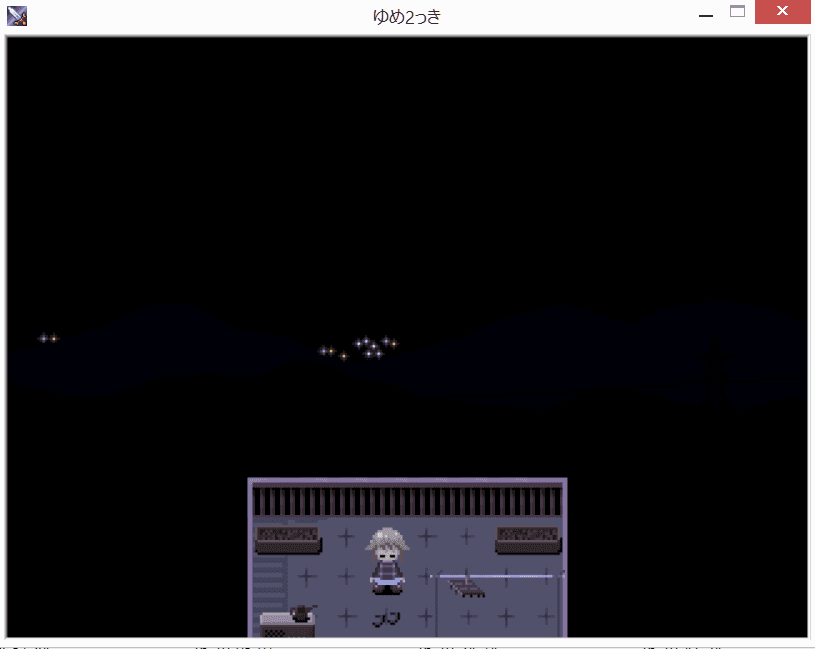
Yume Nikki (2004, translated into English in 2007), a freeware RPG Maker title by an enigmatic and reclusive developer named KIKIYAMA, is often evoked in discussions of surreal games. Madotsuki cannot leave her apartment, she can only write in her diary (save the game), play Famicom, and sleep. The gameplay consists of exploring her strange and disturbing dreamscapes and collecting "effects" from the characters there. There is no dialogue or plot, the story is gleaned through inference, leading to a number of fan theories and speculation regarding the nature and meaning of Madotsuki's dreams. The game is widely considered upsetting and disturbing, the pace is slow, the level design is awkward. In spite of this, it has influenced many developers. If one measures a game's success by its emotional resonance and the inspiration it fuels, Yume Nikki has been very successful indeed.

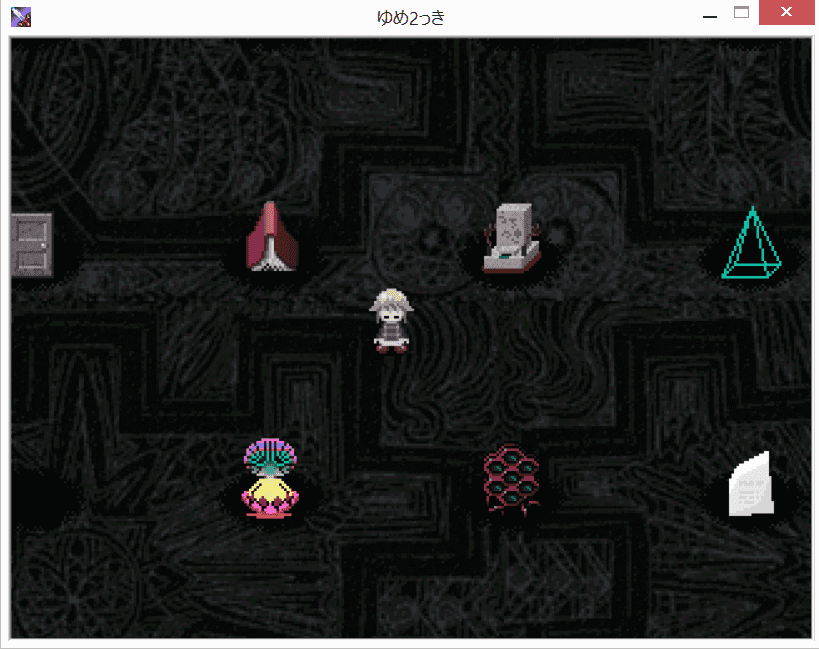
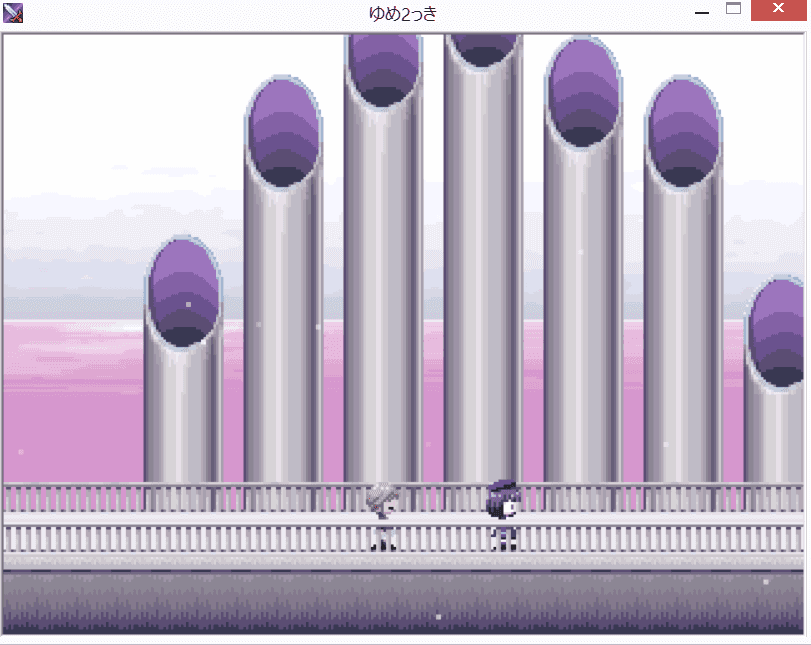
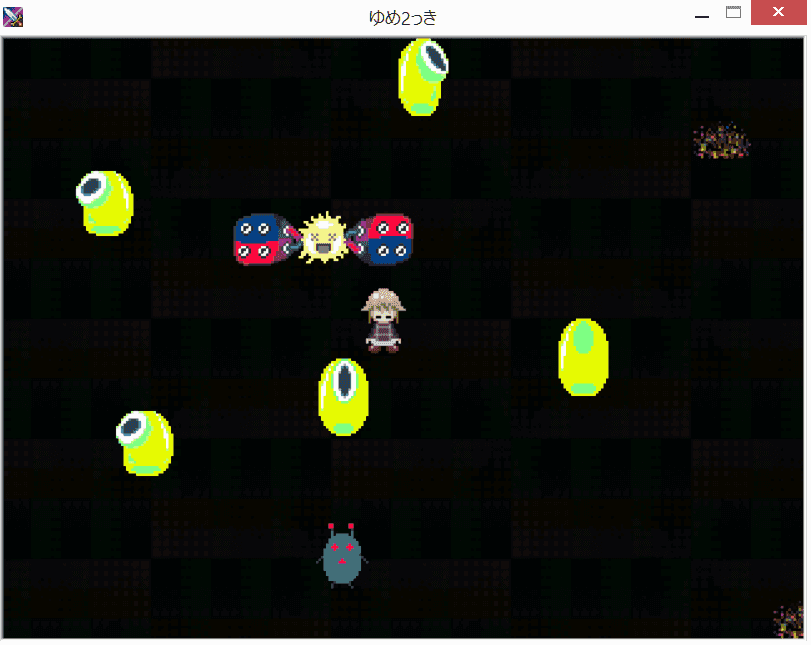
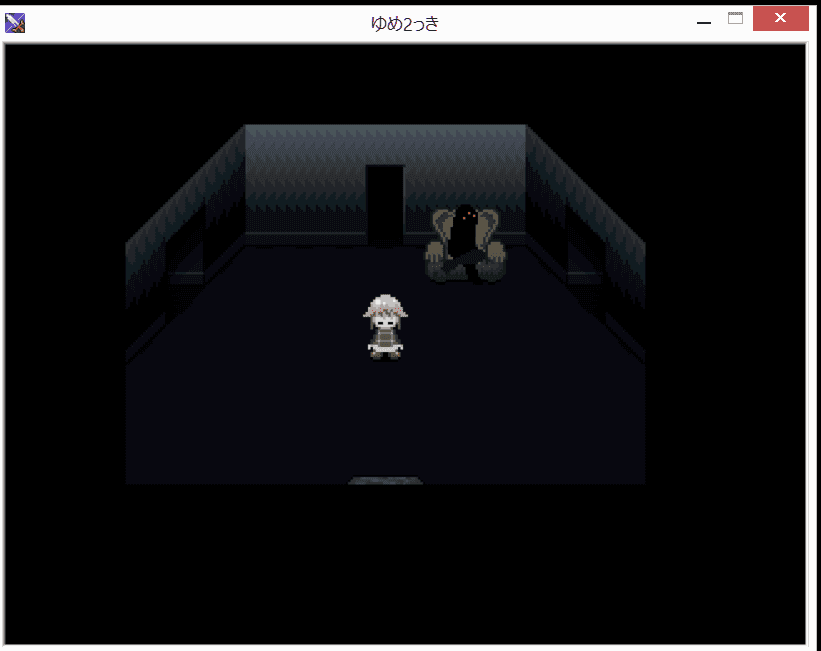
One thing that particularly interested me about Yume Nikki was the wealth of fannish content. There is an entire wiki devoted to Yume Nikki fangames. Perhaps most notable to the English-speaker are Yume 2kki (2007) and .flow (2009), both of which I have seen on best-of lists. Yume Nikki birthed a new genre, one that is accessible to hobbyist and novice developers, and over 150 fangames have resulted. The fangames are technically comparable to the original, some perhaps even superior; in this sense, the fandom and the developer are on equal footing. 

I have read complaints that the fandom is dying or is already dead, I have no idea. I am repeatedly stumbling across references to it in current conversation and interviews. The game apparently went viral among Japanese players around 2010, English-language fandom may have peaked around 2013-14, it's difficult for me to tell but that appears to be the point there was noticeable saturation, with prominent developers in the community making lists fangame tropes that new developers should avoid.

At this point, I've barley scratched the surface. The game and its fandom are fascinating.

What Did I Play on 2016-02-08?

  • #her story Arrow: More posts

I've been interested in "terminal-based epistolary games" for some time and Her Story presents an interesting take on the concept. The player is given access to a Police Department terminal with VHS clips from a series of interviews conducted in 1994 and is tasked with figuring out her story. The clips are accessible by searching for keywords in the transcripts, but the search will only return the first five results. It's an important self-imposed limitation, because if I want to learn everything about Eric, for example, I have to come up with more ways to search for him than his name. The player can save clips and tag them with notes, which comes in handy when trying to remember what was said in session one versus session four, though I kept a .txt file open to jot down notes.

I've read a lot of true crime and Her Story nails the stranger than fiction quality so many of these stories have. Reality is messy. Relationships can be very messy. A premise that is too strange for fiction becomes a compelling puzzle when the pacing, discovery, and direction are controlled solely by the player. The object of Her Story is the satisfaction of the player's curiosity. One cannot win in a goal-oriented sense unless winning means discovering and viewing all the clips (I had 10 clips remaining).

The game never breaks immersion. An NPC sends a message asking if the player is done reviewing the archives and the player can "end" the game by typing yes. There are notes on the desktop, an old-school computer game, a recycle bin with a deleted file. There is even a monitor screen glare overlay. It can be toggled off in settings, but the reflection in the screen glare is a clue itself. Background music occasionally plays, but it is low and unobtrusive and it turns off whenever a clip is played.

The achievement stats are interesting. 50% of players have "beaten" the game--that is, they've formally concluded their investigation and seen the credits. 20% of players have seen all 217 clips, which is something that requires a little doing, and I am comfortable assuming the 9.7% of players who obtained the rarest achievement (getting a draw in the in-game game) did so to achieve a perfect game.